Digital or Offset? Understanding the Real Cost Difference
Published 21 April 2026
The digital versus offset question is one of the most common in commercial print procurement, and one of the most frequently answered with incomplete information. The real cost difference between the two technologies is not a simple per-unit calculation. It is a function of quantity, complexity, turnaround, substrate, finishing and the true cost of your time.
The Fixed-Cost Divide
Offset printing requires plates, make-ready time and ink calibration before the first sellable sheet comes off the press. These fixed costs are substantial, but they are distributed across the entire run. At high volumes, the per-unit contribution of setup costs becomes negligible. Digital printing has minimal fixed costs. There are no plates, minimal make-ready and near-instant colour calibration. This makes digital cheaper at low volumes, but the per-unit cost does not drop as steeply with quantity.
Where the Crossover Sits Today
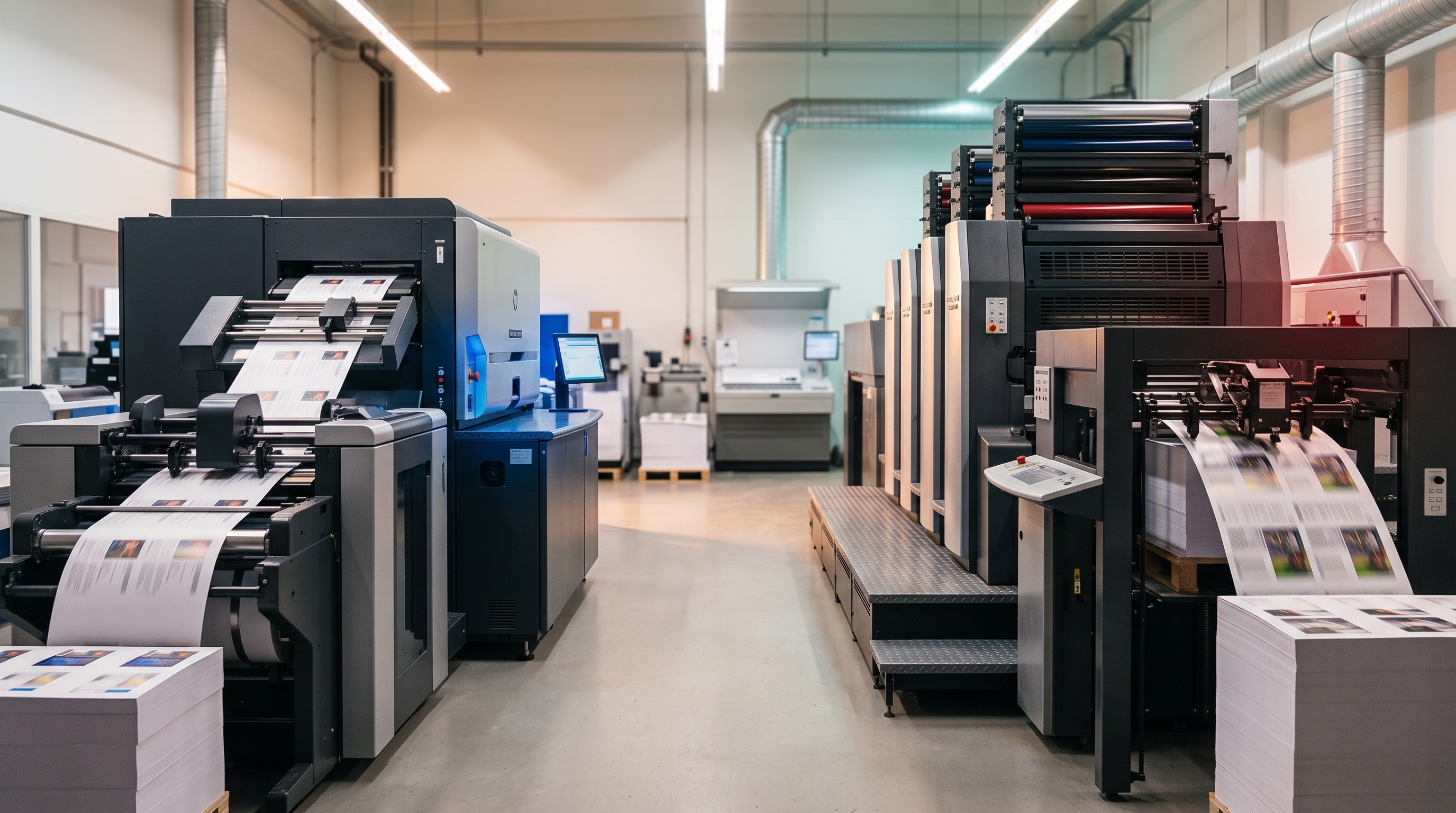
The traditional crossover point between digital and offset sat at around 1,000 to 2,000 units for standard commercial work. Modern high-speed inkjet technology has moved that crossover significantly higher. On Westman Printing's Fujifilm Jet Press 1160CF, the crossover can sit at 5,000 units or more for certain job types, particularly those requiring variable data or versioning.
The Hidden Costs of Offset
The per-unit price of offset printing does not capture the full cost. Minimum order quantities force buyers to print more than they need, and the excess often ends up in storage or waste. Plate changes for corrections are expensive. Lead times are longer, which means earlier commitment and less flexibility. These hidden costs should be factored into every comparison.
When Offset Still Wins
Offset printing retains clear advantages for very long runs, Pantone colour matching, specialty substrates and certain finishing techniques that require precise ink laydown. The technology has not been superseded. It has been joined by a digital capability that is genuinely competitive in territory that was previously offset-only.
The Right Question to Ask
The right question is not whether to use digital or offset. It is which press gives the best outcome for this specific job. A printer that operates both technologies and recommends honestly based on the brief, not on which press needs feeding, is the partner who will deliver the lowest true cost over time.