Personalised Mail Still Outperforms Email
Published 24 March 2026
In an era of inbox overload, the physical letterbox has become the less contested channel. Personalised direct mail consistently delivers higher response rates, longer engagement times and stronger brand recall than email. The data is not ambiguous. When the objective is to generate a measurable response from a defined audience, personalised mail outperforms email on almost every metric that matters.
The Response Rate Gap
Direct mail response rates for prospect lists average between 2.7 and 4.4 per cent. Email response rates for the same type of campaign average 0.6 per cent. For house lists, the gap narrows but mail still leads. These are not cherry-picked figures. They are consistent findings across multiple industry studies over multiple years.
Attention Is the Scarce Resource
The average professional receives over 120 emails per day. The average household receives fewer than five pieces of addressed mail. The competition for attention in the physical letterbox is dramatically lower than in the inbox. A well-produced, personalised mail piece receives an average of 30 seconds of attention. An email receives 11 seconds.
Personalisation Drives the Gap Wider
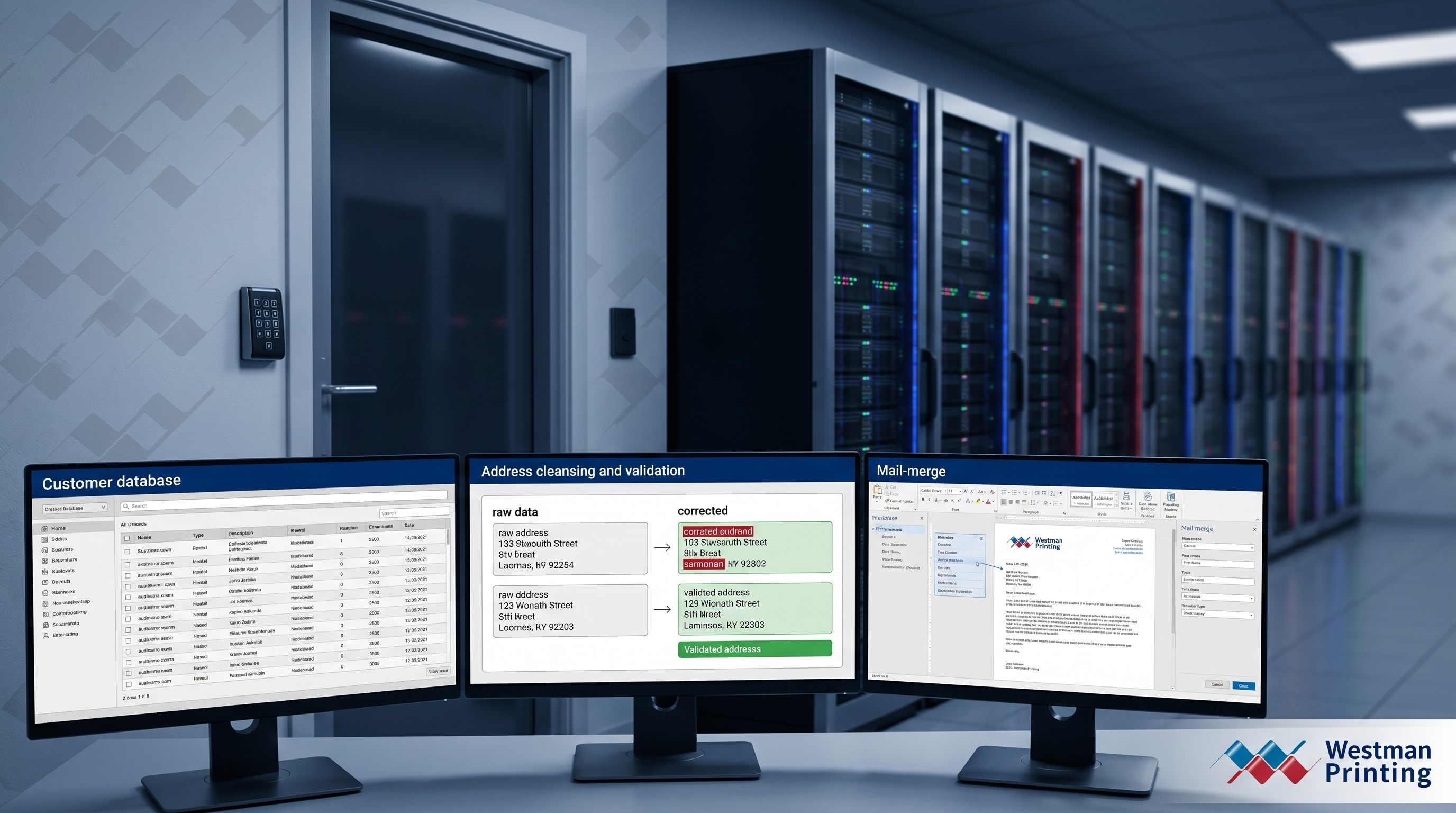
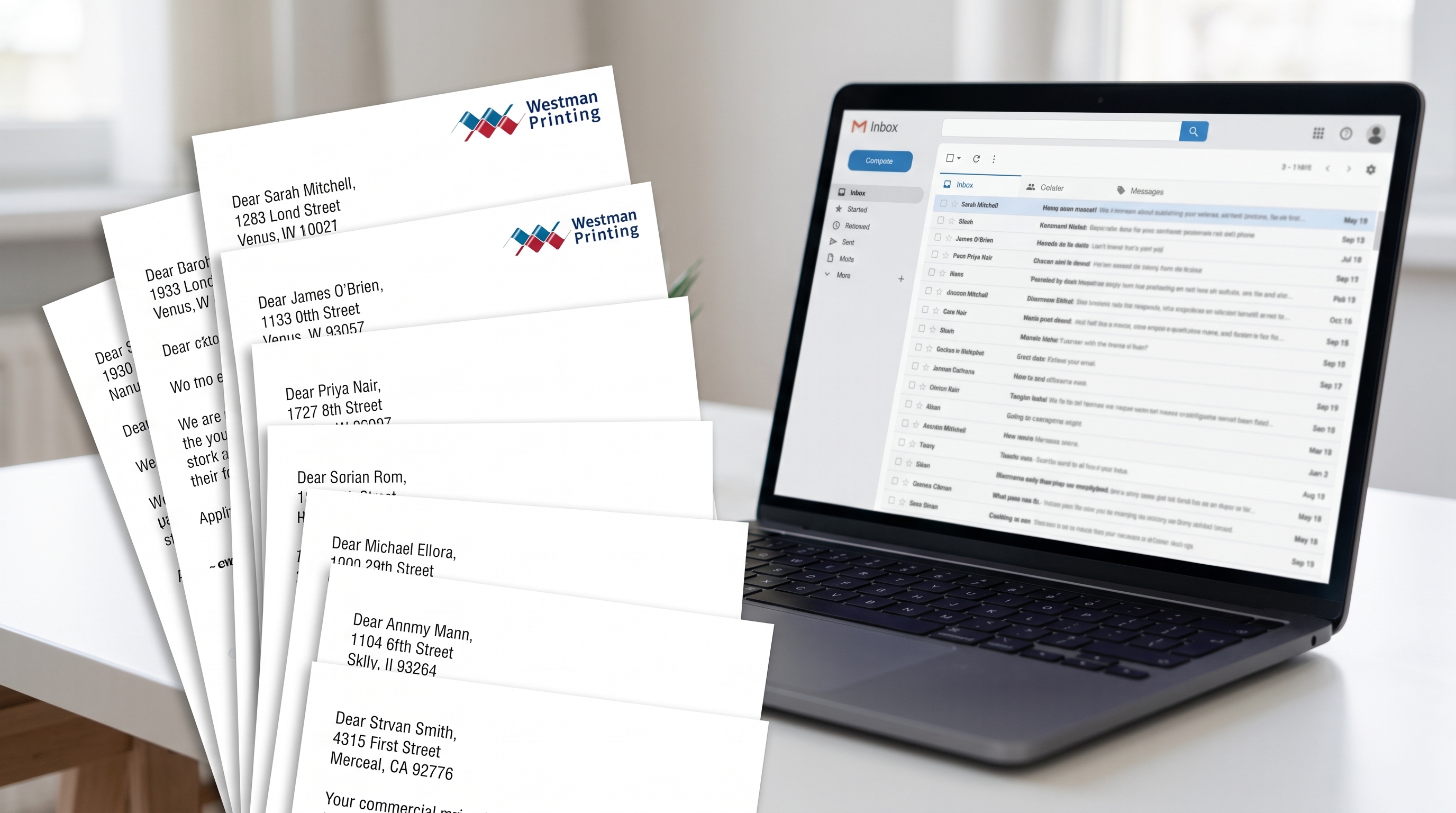
Generic direct mail performs well. Personalised direct mail performs significantly better. Variable data printing allows every piece in a run to carry individualised content: the recipient's name, a relevant offer, a localised message, a personalised image. This level of personalisation is not just a gimmick. It is a statistically significant driver of response.
The ROI Calculation
Direct mail costs more per unit than email. This is undeniable. But cost per unit is not cost per response. When the response rate of personalised mail is five to ten times higher than email, the cost per response is often lower. The ROI calculation favours mail for campaigns where the value of a response justifies the higher unit cost, which covers most B2B and high-value B2C scenarios.
Why Not Both
The strongest campaigns use personalised mail and email together. Mail drives initial awareness and response. Email follows up with reminders and additional information. The two channels reinforce each other, and the combined response rate exceeds what either channel achieves alone.