Why Your Data Partner Matters as Much as Your Printer
Published 24 February 2026
Print quality is visible. Data quality is invisible. But in any campaign that relies on personalisation, segmentation, variable content or regulatory compliance, the data decides the result more than the press does. A perfectly printed mail piece sent to the wrong address, with the wrong name, or containing the wrong information is not a print failure. It is a data failure. And data failures are more common, more damaging and harder to detect than print failures.
Data Quality Drives Campaign Performance
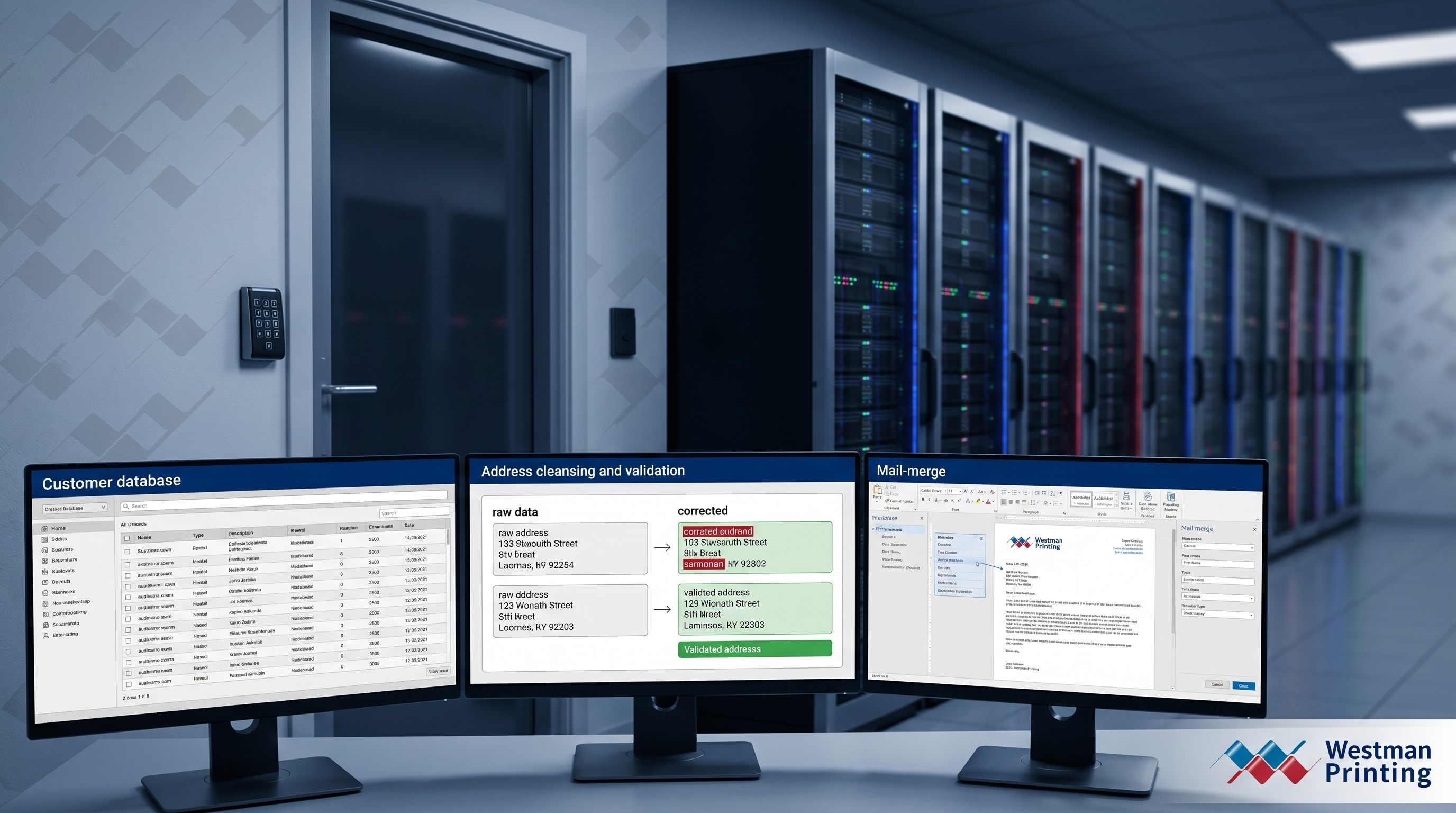
The best creative, the best print quality and the best fulfilment process in the world cannot compensate for dirty data. Duplicate records waste budget. Outdated addresses waste postage. Formatting errors create embarrassing personalisation failures. Data cleansing, deduplication and validation are not administrative overheads. They are campaign performance drivers.
Security Is Non-Negotiable
Every personalised print campaign involves the transfer and processing of personal data. In regulated industries, that data may include financial information, medical records or government correspondence. The security of that data through every step of the production chain is not a feature to be negotiated. It is a legal obligation. Your data partner's security posture is your security posture.
Integration Eliminates Handoff Risk
Every time data changes hands between organisations, risk increases. File transfers, format conversions, manual imports: each handoff introduces the potential for error, delay or breach. A production partner that handles data processing and print production under the same roof eliminates the riskiest handoffs in the chain.
The Right Partner Understands Both Worlds
The ideal data partner for print communications is not a standalone data bureau. It is a production partner that understands both data and print with equal depth. At Westman Printing, our data processing team works alongside our production team. The people who clean and segment the data understand how it will be used on press, and the people who run the press understand what the data requires.